Equal density does not mean direct replacement
NOR Flash procurement should start with the boot flow and software image, not only the number of megabits. Devices with the same density can differ in SPI, Quad SPI, Octal SPI, or parallel interface, read and write timing, address mode, erase blocks, supply voltage, and status-register behavior. An RFQ should state the full MPN, manufacturer, density, interface, required quantity, and board-level package limits. A request that says only “SPI Flash” and a capacity rarely identifies a part that can actually be used.
Confirm the interface and boot chain first
The customer engineering team should verify the controller protocol, clock frequency, I/O width, 3 V or 1.8 V supply, boot-ROM compatibility range, and any dependency on quad mode, DTR, protection bits, or secure areas. A candidate with a similar footprint can still require firmware or timing changes. Procurement can organize candidates and supply information, while the final production-use approval of an alternate remains with customer engineering.
State package, marking, and packing requirements
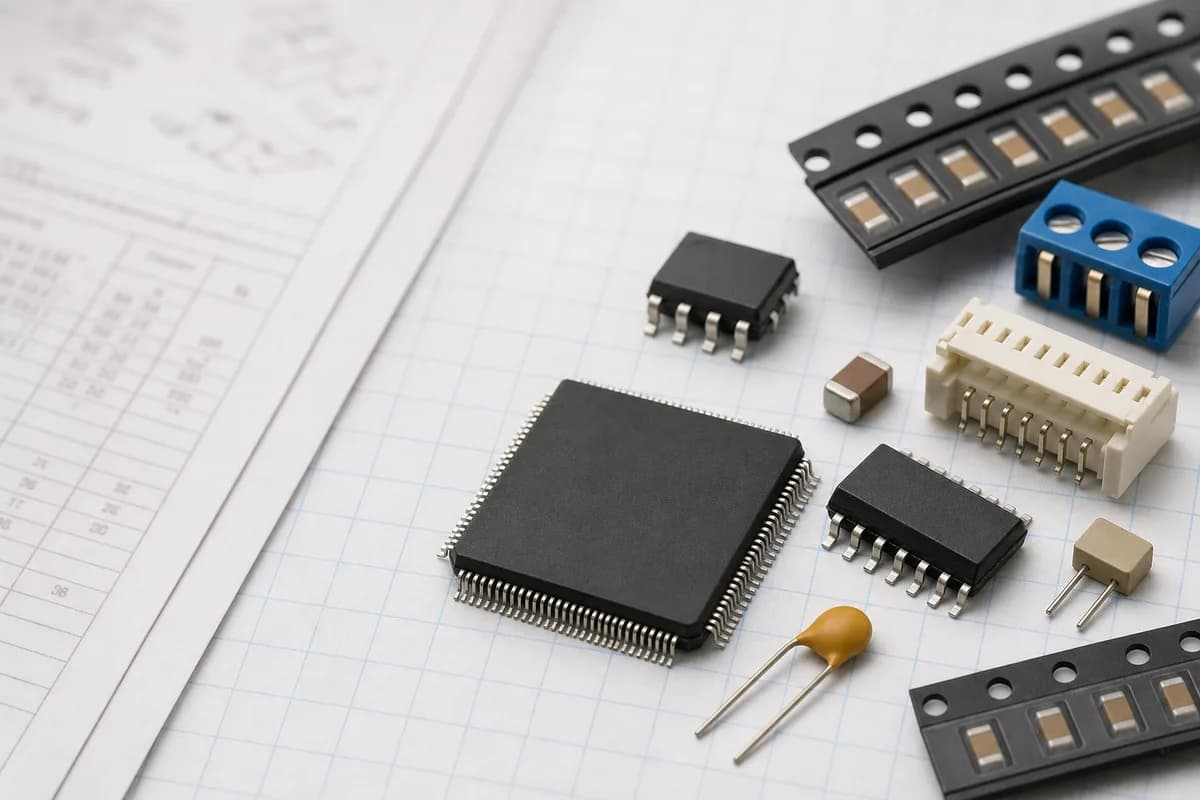
- Identify SOIC, WSON, BGA, or other package, with dimensions, pin count, and height limits.
- Distinguish die density from usable address space to avoid capacity-unit errors.
- State whether original tape-and-reel, tray, moisture packaging, or label information is required.
- Where service or regulatory obligations apply, request date-code, lot, and traceability information in advance.
Confirm supply by RFQ instead of assuming stock
NOR Flash is often treated as a commodity in long-life designs, yet an older process node, a specific voltage, or a small package can create its own supply risk. List non-substitutable boot devices separately from alternates that may be evaluated, and include annual demand, initial quantity, destination, and desired arrival window. Quantity, lot, packing, lead time, and supply status should be confirmed per RFQ. KETA does not treat unverified inventory or a fixed MOQ as a commitment.
Quick check before submission
- Does the full part number include density, package, and temperature suffix?
- Are controller, firmware, and voltage domains compatible with the intended interface?
- Are partial delivery, mixed lots, or alternate candidates allowed?
- Are packing, date-code, and documentation expectations written down?
- Is the critical NOR line clearly marked in the BOM for priority confirmation?
Sending this information with the RFQ or BOM keeps the sourcing response focused on verifiable quotation conditions and preserves a clear technical decision boundary for engineering.